


Marrakech has its place: the call to prayer rolling across rooftops, citrus piled high in the souks, the hush of a riad behind a busy medina lane. But the best Moroccan experiences beyond Marrakech begin when the country has room to surprise you. They unfold in a Fez workshop where a master zellige artisan sets tiny tiles by hand, over tea in a High Atlas village, and beneath a Sahara sky so wide it changes your sense of scale.
Morocco is not a destination to collect in a rush. Its most memorable moments tend to arrive when an itinerary leaves space for conversation, regional food, changing landscapes, and the people who give each place its character. For travelers who want to feel part of the world rather than simply pass through it, these are the experiences worth building a journey around.
1. Meet the living craft traditions of Fez
Fez is often described as Morocco’s spiritual and cultural heart, but that description can feel abstract until you spend time with the people keeping its traditions alive. Within the labyrinth of Fez el-Bali, crafts are not staged relics. Copper is still hammered, leather is still dyed, and zellige mosaics are still cut and assembled with extraordinary precision.
A meaningful visit goes beyond browsing the market stalls. Arrange time with an artisan in a working atelier and learn what distinguishes hand-cut tile from a factory imitation, or how a pattern is built from geometry and patience. The best encounters are reciprocal: you come with curiosity, listen more than you photograph, and buy only when the work genuinely speaks to you.
Fez rewards travelers who can accept a little intensity. The medina is crowded, navigationally challenging, and often noisy. Yet with a thoughtful local guide and a well-located riad, it becomes a place of texture and depth rather than overwhelm. Two or three nights usually allow enough time to move beyond first impressions.
2. Share a table in the countryside around Meknes
The rich farmland around Meknes and the Middle Atlas offers another side of Moroccan life: olive groves, vineyards, market gardens, and family kitchens shaped by the seasons. This is where food becomes a direct connection to land and hospitality.
A private cooking experience on a rural estate or in a family home can be far more revealing than a formal class. You might begin at a local market, selecting vegetables, herbs, and spices before preparing a slow-cooked tagine, fresh bread, or a fragrant pastilla. The goal is not to perfect a recipe in an afternoon. It is to understand the rhythms behind it: the long preparation, the generosity of the table, and the way a meal makes room for stories.
For travelers who enjoy wine, the Meknes region also offers an interesting, often overlooked perspective on Morocco’s agricultural landscape. It is a quiet addition, best approached as part of a broader food-focused day rather than the reason to visit.
3. Stay in the High Atlas, not just pass through it
The High Atlas Mountains are frequently reduced to a scenic drive on the way to the desert. They deserve more. Berber, or Amazigh, communities have lived among these valleys and peaks for centuries, and a stay here offers a different tempo from Morocco’s imperial cities.
Choose a small mountain lodge or carefully selected guesthouse and spend time walking between villages with a local guide who knows the terrain and the people. Depending on the season and your fitness, the day might involve a gentle valley walk, a longer trek with views toward Mount Toubkal, or simply a slow afternoon on a terrace as light moves across the hillsides.
This is also a place to travel with particular care. Mountain communities should not be treated as photographic backdrops or poverty tourism. The right experience supports locally owned businesses, pays guides fairly, respects privacy, and creates genuine exchange without making residents feel observed. For families, the mountains can be especially rewarding when activities are paced gently and connected to daily life: bread baking, orchard walks, mule paths, and tea shared with intention.
4. Follow the old caravan route to the Sahara
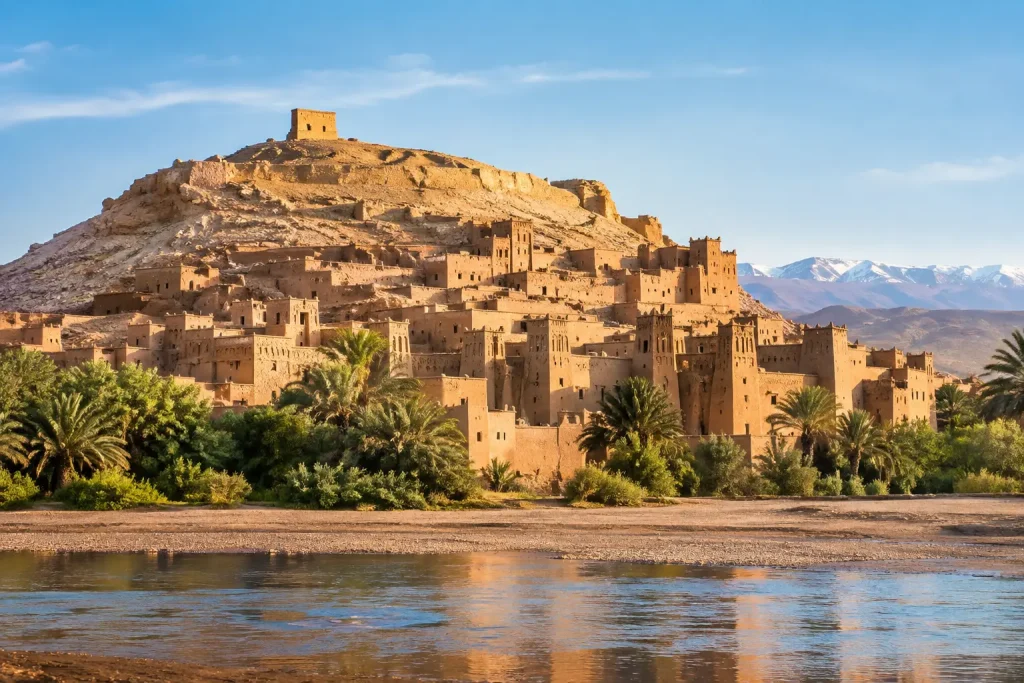
The road from the mountains toward the Sahara tells a story in landscapes. It passes kasbahs built from earth, palm-filled oases, and valleys that shift from green to red to gold. A well-paced route through Skoura, the Dades Valley, or the dramatic Todra Gorge turns the desert journey into more than a long transfer.
The Sahara itself is most powerful when it is not overproduced. A camel ride at sunset can be beautiful, but it should be only one small part of the experience. Look for a camp that is intimate, responsibly operated, and designed with the desert rather than against it. A quiet walk on the dunes, a meal prepared with care, and time outside after dark often matter more than entertainment or spectacle.
There is a trade-off here: reaching Erg Chebbi or Erg Chigaga requires serious driving time. If you have fewer than seven or eight nights in Morocco, forcing in the desert can make the rest of the journey feel compressed. In that case, the High Atlas and southern kasbah country may offer the sense of remoteness you are seeking without so many hours on the road. If the desert is a lifelong dream, give it the time it deserves, ideally with a night in the mountains or a valley on either side.
5. Feel the Atlantic rhythm in Essaouira
Essaouira offers a graceful counterpoint to Morocco’s inland cities. Its whitewashed medina faces the Atlantic, fishing boats return to the harbor with the day’s catch, and the wind gives the town a refreshing, slightly untamed character.
Come for more than a beach break. Wander with a guide who can introduce the town’s Jewish and Amazigh heritage, browse the woodworkers’ studios, and eat simply at the port, where grilled fish is chosen fresh and cooked over coals. In the surrounding countryside, argan oil cooperatives can provide insight into a vital local product, though it is worth choosing visits that are transparent about how women are paid and how the experience benefits the cooperative.
Essaouira is ideal after the sensory intensity of Fez or Marrakech. Three nights gives you enough time to settle into its pace, take a coastal walk, and let an unplanned afternoon remain unplanned. The trade-off is weather: even in warmer months, the Atlantic breeze can be brisk, and the sea is not always suited to leisurely swimming. That is part of the town’s appeal for many travelers, but it helps to arrive with the right expectations.
6. Seek the quieter north in Tangier and Tetouan
At Morocco’s northern edge, Tangier has long been a meeting point between Africa and Europe. Its energy is literary, maritime, and slightly elusive. Spend time in the kasbah, pause for mint tea overlooking the Strait of Gibraltar, and let a knowledgeable guide place the city’s layered history in context rather than reducing it to its famous expatriate past.
Nearby Tetouan feels more intimate and more distinctly Andalusian in its architecture and cultural atmosphere. Its medina, a UNESCO World Heritage site, is less overwhelming than Fez and can be an excellent choice for travelers drawn to traditional arts, whitewashed lanes, and a slower daily rhythm.
The north works particularly well on a longer Morocco itinerary or when paired with a journey through southern Spain. It is less convenient to combine with the Sahara in a short trip, so this is a destination where restraint pays off. Rather than trying to see every region, choose a route with a clear emotional logic.
7. Spend a day in Rabat’s lived-in elegance
Rabat rarely competes for attention in the way Marrakech or Fez does, which is precisely why it can be so satisfying. Morocco’s capital is composed, coastal, and deeply lived-in. Here, broad boulevards, diplomatic calm, and contemporary cultural life sit beside the old medina, the Kasbah of the Udayas, and the ruins of Chellah.
A day or two in Rabat is especially appealing for travelers who appreciate design, history, and a city that does not feel built around visitors. Walk the kasbah in the early morning, explore contemporary galleries or craft spaces, and have a long lunch where local families are doing the same. It is not Morocco at its most theatrical. It is Morocco at ease.
8. Build in the luxury of unstructured time
The most personal Moroccan itineraries are not filled from morning to night. Leave an afternoon to return to a market you enjoyed, sit with a book in a riad courtyard, or follow the recommendation of someone you met over lunch. These pauses are where a place often becomes real.
Thoughtful planning creates that freedom. The right guides, drivers, and stays handle the practical details, while the journey itself retains room for appetite, weather, energy, and serendipity. That balance is especially valuable in Morocco, where a spontaneous invitation for tea or a conversation in a workshop may become the memory that stays with you longest.
A trip designed with soul does not try to make Morocco fit a checklist. It lets the country set the pace, then gives you enough time and care to listen.